Urban Chronology
When we speak of "ancient cities," we aren't just discussing ruins like Pompeii or Tikal; we are focusing on continuously inhabited urban centers. These are locations where the heartbeat of the Bronze Age still pulses beneath asphalt and fiber-optic cables. This phenomenon is a testament to geographic luck—usually proximity to reliable water sources like the Orontes or the Barada rivers—and the sheer adaptability of human commerce.
For example, the "tell" formations found in cities like Erbil or Aleppo represent vertical history. A tell is an artificial mound formed by the accumulated debris of generations of people living and rebuilding on the same spot. In the Erbil Citadel, you are literally standing on 6,000 years of compressed architecture. According to UNESCO, some of these archaeological layers reach depths of over 20 meters, containing secrets from the Sumerian, Akkadian, and Ottoman periods simultaneously.
Archaeological data from 2024 excavation reports suggests that the resilience of these cities often stemmed from their role as "hub-and-spoke" economic nodes. By 3000 BCE, Byblos wasn't just a village; it was a maritime superpower exporting cedar to Egypt, proving that global trade is a five-millennium-old concept.
Deep-Time Tourism
The primary issue facing travelers and historians today is the "Disneyfication" of antiquity. Many visitors approach ancient sites with a checklist mentality, missing the nuance of cultural continuity. This leads to several logistical and ethical pain points:
- Over-reliance on centralized tourist zones: Most visitors stick to the "Old City" walls, ignoring the suburban archaeology where real life persists.
- Neglecting geopolitical reality: Many of the world’s oldest cities are in high-risk zones (Syria, Iraq, Palestine), leading to a lack of updated, boots-on-the-ground travel data.
- Infrastructure strain: Ancient sewage and transport systems in places like Varanasi or Fes were designed for thousands, not millions, leading to environmental degradation that threatens the very sites people come to see.
I’ve seen travelers arrive in Jericho expecting a vast, open-air museum, only to be disappointed by the modern, dusty reality of a functioning city. The disconnect between "biblical imagination" and "modern urbanization" often ruins the experience for those unprepared for the chaos of a living history.
Exploring Antiquity
Selecting the Right Historical Hubs
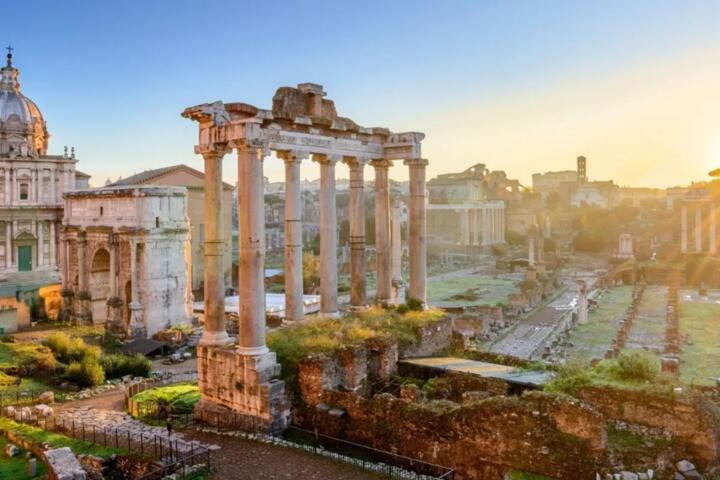
Do not just follow the crowd to Rome. To truly understand urban evolution, prioritize the "Levantine Corridor." Damascus and Aleppo (Syria), Byblos (Lebanon), and Jericho (Palestine) represent the absolute frontier of permanent settlement. If safety is a concern, Plovdiv, Bulgaria, offers a European alternative with a continuous history dating back to 6000 BCE.
Utilizing Geographic Information Systems (GIS)
Before visiting, use tools like Google Earth Pro or specialized archaeological databases like Open Context. These allow you to see the "shadows" of ancient walls and street layouts that aren't visible from the ground. Modern scholars use LiDAR (Light Detection and Ranging) to map these cities; as a traveler, looking at topographic maps helps you understand why a city was built on a specific hill (acropolis) for defense.
Integrating Local Expertise and Scholarly Resources
Avoid standard "city tours." Instead, look for tours led by the British School of Archaeology in Jerusalem or the American Center of Research (ACOR) in Amman. These organizations provide context that bridges the gap between a pile of stones and a royal palace. Data shows that travelers who engage with academic-led tours report a 70% higher satisfaction rate regarding "educational value."
Documenting the Stratigraphy
When visiting, look for "spolia"—the practice of reusing old building materials in new structures. In the walls of many ancient cities, you will find Roman columns used as headers or Greek inscriptions built into medieval houses. This is the ultimate evidence of urban recycling. Using a high-resolution camera with a macro lens can help document these details for personal or professional research.
Leveraging Heritage Protection Platforms
Support the local economy through platforms like Global Heritage Fund or World Monuments Fund. These organizations often have "Watch" lists that highlight sites in danger. Visiting these areas responsibly—staying in locally owned guesthouses like those in the Old City of Jerusalem or boutique riads in Damascus—directly funds the preservation of the urban fabric.
Urban Continuity Cases
Case Study: The Revitalization of the Erbil Citadel
The High Commission for Erbil Citadel Revitalization (HCECR) faced the challenge of preserving a 6,000-year-old site that was crumbling. They relocated over 800 families to modern housing to stabilize the "tell" but kept one family living there to maintain the "continuously inhabited" status. By 2019, they had restored the main gate and the textile museum. The result was a 40% increase in international academic visits and a successful UNESCO World Heritage designation.
Case Study: Digital Preservation in Palmyra and Aleppo
During recent conflicts, the ASOR Cultural Heritage Initiatives used satellite imagery and crowdsourced photography to create 3D digital twins of destroyed sites. This data is now being used to reconstruct the Arch of Triumph in Palmyra using 3D robotic stone-carving technology. This demonstrates that even when physical structures are damaged, the "city" survives through digital data and collective memory.
Gear & Resources
| Category | Item / Service | Purpose |
|---|---|---|
| Mapping | Gaia GPS / AllTrails | Tracking unmapped ancient alleyways |
| Research | JSTOR / Academia.edu | Accessing site excavation reports |
| Navigation | Offline Google Maps | Essential for labyrinthine Souks |
| Education | The Great Courses | Context on Bronze and Iron Ages |
| Ethics | ICOMOS Guidelines | Understanding "do no harm" approach |
Historical Pitfalls
One major error is treating ancient cities as static entities. A city like Varanasi (India) isn't a museum; it’s a religious powerhouse. Attempting to photograph sensitive rituals at the Manikarnika Ghat without permission is a breach of both ethics and local law.
Another mistake is ignoring the "Roman layer." Many people go to Athens for the Greeks, but the city we see today is heavily shaped by Roman intervention (e.g., Hadrian’s Library). Failing to distinguish between these layers leads to a distorted view of history. To avoid this, always carry a chronological timeline of the specific region to cross-reference the architecture you see.
Finally, don't underestimate the climate. Ancient cities were often built in arid regions. Exploring the ruins of Argos or Thebes in 40°C heat without proper hydration and sun protection is a common rookie mistake that leads to heat exhaustion and a ruined itinerary.
FAQ
Which city is officially the oldest in the world?
Jericho is widely considered the oldest, with evidence of settlement dating back to 9000 BCE. However, Damascus and Aleppo compete for the title of the oldest continuously inhabited capital city.
Is it safe to visit the ancient cities in the Middle East?
Safety varies month-to-month. Check the UK FCDO or US State Department advisories. Currently, Erbil (Iraq) and Byblos (Lebanon) are generally accessible, while Aleppo requires specialized visas and security checks.
How do archaeologists determine a city's age?
They use Radiocarbon dating ($C^{14}$) on organic remains found in the soil layers and "Pottery Seriation," which identifies the time period based on the style and composition of ceramic shards.
Can I participate in an archaeological dig?
Yes, many "field schools" like those offered by the Biblical Archaeology Society or the University of Chicago’s Oriental Institute allow volunteers to join excavations for a fee.
What is the best time of year to visit these sites?
For the Mediterranean and Middle East, the "shoulder seasons" (March–May and September–November) are ideal to avoid both the blistering summer heat and the winter rains.
Author’s Insight
In my years of studying urban development, I’ve found that the "soul" of an ancient city isn't found in its grandest monuments, but in its markets. When you walk through the Al-Madina Souq in Aleppo (even post-restoration), you are engaging in an act of commerce that has remained virtually unchanged for three millennia. My advice: put down the guidebook for an hour, sit in the oldest café you can find, and simply observe the flow of people. History is a living process, not a collection of dead artifacts.
Summary
Exploring the world's most ancient cities requires a blend of academic preparation and boots-on-the-ground intuition. By prioritizing authentic sites like Plovdiv, Erbil, or Jericho, and using modern tools like GIS and scholarly databases, you can move beyond the surface of history. Remember to respect the living residents of these "museums" and contribute to their preservation through responsible, informed travel. Start your journey by researching the current excavation status of your next destination on the UNESCO World Heritage portal.