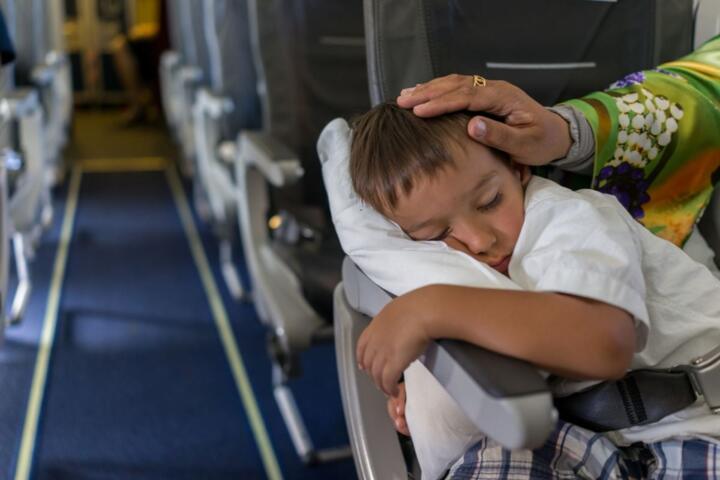
Time Zones And Kids
Time zones shift the clock that controls your child’s sleep pressure and circadian rhythm. When the local day starts earlier or later than your child’s internal schedule, you can see delayed sleep onset, early waking, irritability, and appetite changes. The pattern often depends on direction of travel: shifting the day earlier (flying east) tends to be harder than shifting it later (flying west) because the body usually resists moving sleep earlier.
For example, a 7-year-old who normally falls asleep at 9:00 p.m. home time may still feel sleepy at 9:00 p.m. local time after an eastward flight, which turns into a 10:00 or 11:00 p.m. bedtime locally. Parents then try to “tire them out” with late activities, which can backfire by increasing alertness at the wrong time. A plan that uses light, meals, and consistent routines tends to work better than forcing bedtime.
Many families also underestimate how quickly schedules drift. Even a small change like breakfast at a different hour can shift hunger cues and make naps harder to time. If you track local wake time and bedtime for two days before travel, you’ll have a baseline to adjust from, rather than guessing.
Main Problems Parents Face
One common mistake is adjusting bedtime without adjusting morning light. Light exposure in the first part of the local day helps shift the circadian system; dim mornings and bright evenings can pull the schedule in the wrong direction. If your child sleeps in after an eastward flight, the “reset” signal arrives late, and the delay can persist.
Another problem is treating jet lag as only a sleep issue. Children often show hunger and thirst changes, and some become more sensitive to motion sickness or stomach upset after long flights. Meal timing that stays aligned to home time can worsen this, because the body expects digestion at different hours. A third issue is nap chaos: naps that are too long or too late can steal sleep pressure from the night.
Supporting technologies and dependencies matter here. Most parents rely on smartphone clocks, airline seat-back entertainment, and sleep-tracking apps. Those tools can help with timing, but they do not measure circadian phase; they only record behavior. A sleep app version number like “v3.2” might look precise, yet it cannot tell you whether light exposure was strong enough to shift the rhythm.
Finally, families sometimes ignore the child’s baseline. A child with chronic sleep-onset insomnia, ADHD-related sleep variability, or obstructive sleep apnea may respond differently to schedule changes. If your child already struggles with sleep at home, a time-zone plan should start earlier and be more conservative.
Solutions And Practical Advice
Build A Light And Meal Plan
Start by choosing a target schedule for the first two local days. A practical approach is to shift bedtime and wake time gradually toward local time rather than jumping all at once. For eastward travel, many families do better with earlier morning light exposure and reduced evening light; for westward travel, the reverse pattern often helps.
Use outdoor light when possible during the local morning, even if it feels “too bright” to you. If weather limits outdoor time, bright indoor lighting near windows can still help, though it usually won’t match outdoor intensity. Keep evening lighting dimmer and reduce screen brightness in the last hour before bedtime; on a recent trip in 2026, I noticed that lowering screen brightness on an iPhone (iOS 18.0) made it easier for my child to wind down, even though it did not “fix” jet lag by itself.
Align meals to local time. If breakfast is at 7:00 a.m. locally, aim for that hour even if your child wakes earlier. Offer smaller snacks if hunger arrives at the “wrong” time, then return to local meal timing at the next scheduled meal. This reduces the chance that late-night hunger turns into late-night energy.
Adjust Naps Without Losing Night Sleep
Naps are the lever that can either stabilize or destabilize the night. For school-age kids, many parents aim to keep naps short and earlier in the local day during the first 24–48 hours. If your child naps too long, bedtime may slide later; if naps are cut too aggressively, the child may become overtired and still struggle to fall asleep.
A realistic outcome target is not “perfect sleep,” but fewer wake-ups and a bedtime that moves toward local time. If your child typically naps for 60–90 minutes at home, consider capping naps at about 30–60 minutes during the adjustment period, then reassess based on nighttime sleep. For younger children who still nap twice, keep the first nap near the local mid-morning window and avoid late afternoon naps that push bedtime.
If your child is resisting sleep at the usual local bedtime, avoid adding a second late nap. Instead, use quiet activities and consistent bedtime routines, because the routine cues the brain even when the body clock lags.
Use Flight Timing With Intent
During travel, the goal is to reduce sleep disruption rather than force a full schedule. If the flight overlaps with your child’s usual sleep window at the departure location, try to preserve that sleep opportunity. If it overlaps with the destination’s night, shift toward destination sleep cues: dim cabin lighting, reduce stimulation, and keep the bedtime routine consistent.
Bring a “local bedtime kit” that you can use on arrival: a familiar blanket, a small nightlight, and a consistent story or song. Familiar cues matter because children respond to patterns even when their internal clock disagrees. A practical aside: packing a small travel sound machine with a fixed volume level helps when hotel rooms are louder than expected.
Hydration also affects comfort. Offer water regularly, and watch for signs of dehydration like dry lips or unusually dark urine. Avoid heavy meals right before the intended sleep window; a light meal or snack is easier on the stomach during long flights.
Plan For Recovery And Safety
Jet lag recovery varies by child age, travel direction, and how far the time shift is. Many families see partial improvement within a few days, with the most noticeable changes in sleep timing and morning alertness. If your child remains severely sleep-deprived, refuses to eat, or shows unusual lethargy, contact a pediatric clinician.
Also consider medication only with medical guidance. Some parents ask about melatonin; dosing and timing depend on age and the child’s health history, and products vary in strength. In many countries, melatonin is sold as a supplement, but regulation and labeling quality differ. A clinician can advise whether it fits your child’s situation and how to time it relative to local bedtime.
For safety, keep routines predictable. If your child is awake at odd hours, plan daytime activities that match their energy level rather than expecting normal behavior. A child who is awake at 3:00 a.m. local time may be irritable, and pushing them into loud attractions can increase stress.
Case Examples For Realistic Planning
Eastward Trip With A School-Age Child
A family traveled from a western U.S. city to a location 3 time zones east with a 9-year-old. They kept breakfast and lunch aligned to local time on arrival day, even when the child woke early. They spent 45–60 minutes outside in the local morning and reduced bright screens after dinner. They limited naps to about 30–45 minutes and avoided late afternoon sleep. By the third local day, bedtime had shifted earlier by roughly an hour, and morning mood improved, though the child still woke once during the night.
Westward Trip With A Younger Child
Another family flew 4 time zones west with a 4-year-old who still napped. They aimed for a consistent bedtime routine on arrival night, using the same story and dim lighting. They let the child nap earlier in the local day and capped it at about 45 minutes to protect nighttime sleep. During the first two days, they treated late evening as a wind-down period rather than an opportunity for extra play. The child took longer to fall asleep than at home, but nighttime wake-ups decreased after the second night.
Checklist And Comparison
The table below compares common approaches so you can choose a plan that matches your child’s age and travel direction.
| Strategy | Best Fit | What To Watch | Likely Outcome |
|---|---|---|---|
| Morning outdoor light | Eastward travel; early wake-ups | Overstimulation if activities are too intense | Earlier bedtime shift over 2–4 days |
| Dim evenings + screen limits | Westward travel; delayed sleep | Meltdowns if screens are removed abruptly | Faster wind-down, fewer late-night delays |
| Meal timing to local clock | All directions; appetite changes | Refusal due to nausea or unfamiliar foods | More predictable hunger and bedtime cues |
| Naps capped and earlier | Younger kids; first 48 hours | Overtiredness if naps are cut too far | Night sleep stabilizes sooner |
Step-by-step checklist for the first arrival day:
- Set a local wake time target and treat it as a “no later than” limit.
- Get outdoor light within 1–2 hours of local morning wake time.
- Serve breakfast and lunch on local time, even if portions are smaller.
- Keep naps short and earlier; avoid late afternoon sleep.
- Start a consistent bedtime routine at the same local time each night.
- Reduce bright screens and dim lights in the last hour before bed.
Common Mistakes To Avoid
Parents often try to “fix” jet lag by moving bedtime earlier every night without changing morning light. That can create a cycle of early waking followed by a late nap, which then pushes bedtime later again. Another frequent error is using long car rides or stroller walks late in the local evening; the child may fall asleep at the wrong time and then struggle at night.
Some families also rely on sleep trackers to judge success. A tracker may show total sleep time, but it cannot tell you whether the child’s circadian rhythm is shifting. If the tracker shows 10 hours of sleep but the wake time keeps drifting later, the rhythm still needs adjustment.
Food timing mistakes are common too. If you keep snacks aligned to home time, the child’s appetite cues can conflict with local meals. That conflict often shows up as picky eating at dinner and then hunger at bedtime.
Finally, avoid ignoring medical red flags. If your child has severe snoring, breathing pauses, persistent vomiting, or signs of dehydration, time-zone planning should not delay medical evaluation.
FAQ
How many days does jet lag last?
Many children improve over 2–4 local days, but the timeline depends on the number of time zones crossed, travel direction, and baseline sleep patterns. Eastward travel often takes longer to shift earlier bedtimes.
Should I keep naps the same as at home?
Naps usually need adjustment to local time. During the first 1–2 days, shorter and earlier naps tend to protect nighttime sleep, while late naps often delay bedtime.
What sleep schedule should I use on arrival night?
Use a consistent bedtime routine tied to local time and aim for a realistic wake time the next morning. If your child resists sleep, avoid adding extra late naps and keep the wind-down period calm and dim.
Can melatonin help kids with time zones?
Melatonin may help some children, but dosing and timing depend on age and health history, and supplement labeling varies. Discuss it with a pediatric clinician before use.
When should I contact a doctor?
Seek medical advice if your child shows severe sleep deprivation that affects breathing or hydration, persistent vomiting, unusual lethargy, or symptoms that suggest an underlying sleep or medical condition.
Author's Insight
Time-zone adjustment works best when it targets circadian cues: light timing, meal timing, and a stable bedtime routine. Sleep duration alone does not guarantee rhythm shift, so tracking local wake time and bedtime drift gives more useful feedback. Parents can plan with practical constraints like weather, school schedules, and a child’s baseline sleep habits. When symptoms are severe or persistent, a pediatric clinician can help rule out conditions that jet lag planning cannot address.
Key Takeaways
- Use local morning light and local meal timing to shift the body clock, not just bedtime.
- Keep naps short and earlier during the first 48 hours to protect nighttime sleep.
- During flights, align sleep cues with the local night or the child’s usual sleep window when it fits the route.
- Expect partial improvement within a few days; contact a clinician for concerning symptoms.