Global Undersea Landscape
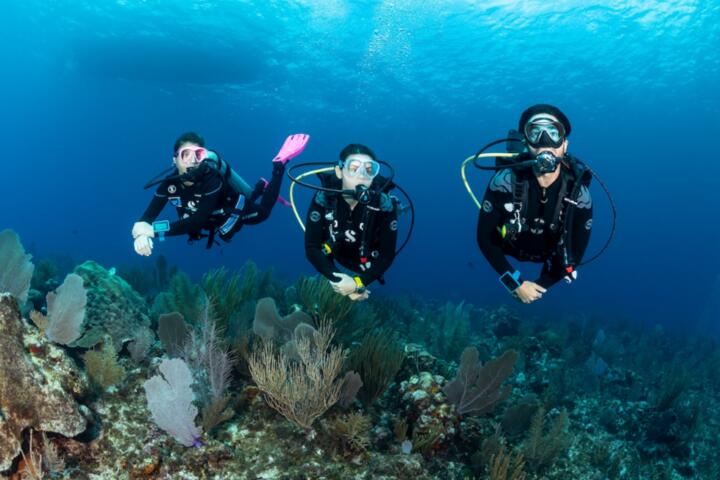
Diving at an elite level is no longer just about recreational sightseeing; it is an exercise in environmental literacy and technical precision. The world’s premier sites are categorized by their geological uniqueness—whether they are tectonic fissures, sunken history, or biological hotspots. For example, diving the Great Barrier Reef involves navigating a system of over 2,900 individual reefs, while a descent into the Blue Hole in Belize requires strict buoyancy control to manage a 124-meter vertical drop.
In my experience, the shift from a "tourist" diver to an "explorer" occurs when you begin calculating nitrogen loads and gas mixtures based on specific thermal thermoclines. According to PADI’s recent statistics, there has been a 15% increase in technical diving certifications globally over the last three years. This indicates a growing demand for sites that offer more than just colorful coral; people want complexity, depth, and historical narrative.
Expedition Planning Fails
The primary issue in high-end diving is the "Experience Gap"—where a diver’s certification level matches the site’s requirements on paper, but their environmental familiarity does not. Many divers attempt current-heavy sites like Wolf and Darwin Islands in the Galapagos without prior "negative entry" practice, leading to rapid air consumption or, worse, being swept into the open blue.
Neglecting the "Micro-Climate" of a dive site is another critical error. Divers often rely on general regional weather rather than specific swell charts or tidal tables provided by services like MagicSeaweed or Windy.com. Failing to account for a 2-knot current can turn a relaxing drift into a grueling physical struggle, leading to exhaustion and decompression risks. This lack of granular planning results in shortened bottom times and missed sightings of apex predators that only appear during specific tidal windows.
Elite Dive Framework
Optimizing Thermal Protection for Extended Bottom Times
Standard 5mm wetsuits are often insufficient for the thermoclines found in deep-water sites like the Cenotes of Mexico or the Silfra Fissure. At Silfra, water temperatures remain a constant 2°C (35°F). Professional divers utilize crushed-neoprene drysuits with heated undergarments from brands like Santi. Using a drysuit allows for a 45-minute dive in near-freezing water where a wetsuit would cause hypothermia within ten minutes.
Mastering Gas Management in Remote Locations
When diving the SS Thistlegorm in the Red Sea, the wreck sits between 16 and 32 meters. Using Nitrox (EAN32) is not just a luxury; it is a safety necessity. It extends your no-decompression limit (NDL) significantly. For instance, at 25 meters, your NDL on air might be 29 minutes, but with EAN32, it jumps to roughly 45 minutes. This extra time is crucial for navigating the interior holds containing WWII BSA motorcycles and Bedford trucks.
Utilizing Advanced Navigation and Tracking
In low-visibility or high-current environments like Maaya Thila in the Maldives, a standard compass is often insufficient. Professionals now integrate GPS-enabled surface markers and wearable dive computers like the Garmin Descent Mk3i. This device allows for sub-wave tank pressure monitoring and surface GPS entry/exit tagging. Having a digital breadcrumb trail ensures that even if you are separated from the group, your exit coordinates are logged.
Biological Timing and Seasonal Windows
To see the hammerhead schooling in Cocos Island, Costa Rica, you must time your trip during the rainy season (June to December). While surface conditions are rougher, the nutrient-rich upwellings attract thousands of sharks. Data from the Cocos Island National Park shows a 40% higher frequency of shark sightings during these months compared to the "calm" season. Always prioritize biological cycles over personal comfort if the goal is elite photography.
Photogrammetry and Documentation Techniques
Modern exploration involves contributing to citizen science. Using an Insta360 X4 or a Sony Alpha a7R V in a Nauticam housing allows divers to create 3D models of reefs or wrecks. By uploading these images to platforms like Reef Check, divers help scientists track coral bleaching or structural decay in real-time. This adds a layer of purpose to the dive that transcends simple recreation.
Real-World Analysis
Case Study 1: The Chuuk Lagoon Recovery
A technical dive team visited Chuuk (Truk) Lagoon to document the deteriorating hull of the Fujikawa Maru. The problem was "internal collapse risk" due to corrosion. They utilized side-scan sonar and rebreather technology (CCR) to stay silent and minimize bubble-induced overhead silt-out.
- Result: They mapped two previously inaccessible lower engine rooms and provided data that led to a 20% increase in conservation funding for the local maritime heritage program.
Case Study 2: Galapagos Current Management
An expedition group at Roca Redonda faced unpredictable vertical currents (down-currents). By switching to high-performance Scubapro Jet Fins and implementing a "buddy-tether" system in extreme zones, they maintained depth stability within a 1-meter margin.
- Result: The team successfully filmed a rare Mola Mola cleaning station at 40 meters, a feat previously failed by three other groups that season due to poor buoyancy control in the wash.
Technical Checklist
| Requirement | Specification / Tool | Primary Purpose |
|---|---|---|
| Gas Mix | Nitrox 32% / Trimix | Increase NDL; less narcosis |
| Computer | Shearwater Perdix 2 | Decompression algorithms |
| Redundancy | 19 cu ft Pony Bottle | Emergency air source |
| Signaling | 2m DSMB + Spool | Surface visibility |
| GPS Safety | Nautilus Lifeline | VHF/DSC radio distress |
Common Dive Errors
- Over-weighting: Many divers carry too much lead to get down quickly. This creates a "plow" effect, increasing drag and CO2 buildup. Aim for neutral buoyancy with 50 bar (750 psi) in your tank at the end of the dive.
- Ignoring the Surface Interval: In places like Palau, where you might do 4-5 dives a day, residual nitrogen builds up fast. Use an app like DAN (Divers Alert Network) Planner to visualize your tissue loading.
- Inadequate Surface Signaling: In the open ocean of the Socorro Islands, a standard whistle is useless against wind. Use a Dive Alert (compressed air horn) that connects to your BCD inflator hose.
- Poor Finning Technique: Using a "flutter kick" in silt-heavy environments (caves or wrecks) ruins visibility for everyone. Master the "Frog Kick" to push water backward rather than downward.
- Skipping the Local Brief: Even if you have 500 dives, a local guide at Blue Corner knows exactly when the tide turns. Listen for the "hook in" signal to avoid being blown off the reef wall.
FAQ
What is the best month to dive with Whale Sharks in the Galápagos?
The peak season is between June and November, particularly around Wolf and Darwin Islands, coinciding with the Humboldt Current's peak flow.
Is a Rebreather (CCR) necessary for the SS Thistlegorm?
While not necessary, it is highly recommended for photographers. It allows for a 2-hour bottom time and silent operation, preventing the "scare effect" on schools of Jacks and Batfish.
How do I manage the "Blue Hole" depth safely?
The Blue Hole requires a deep-air or Trimix certification to go beyond 40 meters. Strict adherence to a 15-meter-per-minute ascent rate is mandatory to avoid DCI.
What is the most "technically" difficult site on this list?
The Silfra Fissure in Iceland, not due to depth, but due to extreme cold and the requirement for perfect drysuit buoyancy to avoid touching the fragile volcanic rock.
Which insurance is best for remote dive expeditions?
DAN (Divers Alert Network) Pro-level insurance is the industry standard, offering specialized medical evacuation from remote areas like Raja Ampat.
Author’s Insight
In my fifteen years of exploring deep-water environments, I have learned that the ocean does not care about your logbook count; it only cares about your current state of readiness. I once saw a diver with 1,000 "vacation dives" panic in a mild surge at Sipadan because they had never practiced a mask-clear in moving water. My best advice: treat every dive as a skill session. Even on a shallow reef, practice your back-kick or your one-handed DSMB deployment. Real expertise is the ability to perform basic tasks perfectly under extreme environmental stress.
Summary
Mastering the world's most iconic dive sites requires a synthesis of high-quality gear, physiological awareness, and rigorous planning. From the historical depths of the Red Sea to the tectonic gaps in Iceland, success is measured by the margin of safety you maintain. Prioritize redundant systems, respect seasonal biological cycles, and never stop refining your technical skills. Your next expedition should not just be a trip, but a calculated entry into an environment where preparation is the only currency that matters. Focus on your buoyancy, monitor your gases, and always dive within the limits of your training and the environment's demands.