High-Altitude Winter
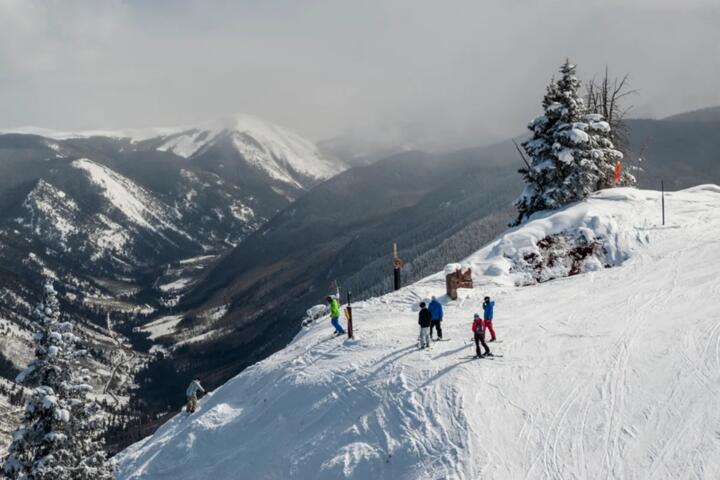
The "Alps-only" mindset is a relic of 20th-century travel logistics. Today, sophisticated infrastructure exists in regions that were previously inaccessible to the average Western tourist. When we speak of "surprising" destinations, we refer to locales like the Tianshan Mountains or the Greater Caucasus, which offer vertical drops exceeding 1,000 meters and dry, continental snow that rivals the "Champagne Powder" of the Rockies.
In my experience scouting global slopes, the transition from groomed European "motorways" to the raw terrain of Georgia or Kyrgyzstan requires a shift in gear and mindset. For instance, Shymbulak in Kazakhstan hosted the Winter Asian Games and sits at an altitude of 3,200 meters, yet it remains off the radar for 90% of European skiers.
Statistical reality supports this shift: according to the 2025 International Report on Snow & Mountain Tourism, while traditional markets are plateauing, the "Rest of the World" segment has seen a 14% increase in modern lift installations over the last five years, specifically in the East.
Non-Traditional Planning
The primary error travelers make is applying Alpine logic—such as relying on real-time English-language apps or standardized piste markings—to remote regions. In places like Gudauri or Karakol, a "blue run" might fluctuate in difficulty based on recent wind-loading, and local rescue protocols differ significantly from the Swiss Air-Glaciers model.
Neglecting "Snow-How" and local microclimates is a costly mistake. Many skiers book based on latitude, assuming all mountains at 40°N are equal. However, the continentality of a place like Uzbekistan means temperatures can drop to -20°C instantly, requiring specialized layering (merino base layers plus 800-fill down) that a casual vacationer might lack.
Failing to secure specialized travel insurance, such as World Nomads or Global Rescue, often leads to financial catastrophe. Standard policies frequently exclude "off-piste" skiing, which is effectively the only way to ski in many emerging destinations where boundaries are fluid and patrol presence is minimal.
Framework for New Peaks
Prioritizing the Georgian Caucasus for Vertical Drop
Georgia is the premier alternative for those who find the Dolomites too manicured. Gudauri and Mestia offer expansive heli-skiing opportunities at a fraction of the price of British Columbia. The key is to leverage local operators like Heliski Georgia, who use Eurocopter (Airbus) B3 helicopters and UIAGM-certified guides.
Why it works: The Greater Caucasus acts as a barrier to moisture from the Black Sea, resulting in massive snowfall (up to 5 meters annually) that stays stable due to the high altitude. On the ground, you should use the Fatmap app for high-resolution 3D terrain modeling, which is far more accurate for this region than Google Maps.
Navigating the Steppes: Kazakhstan’s Shymbulak
Almaty is perhaps the only major global city where you can take a 20-minute gondola from a metro station to a 3,200-meter peak. Shymbulak offers FIS-certified runs and modern Doppelmayr lifts. For the best results, stay at the S.N.e.G. Hotel, which sits at 2,850 meters, allowing you to hit the "corduroy" before the city crowds arrive at 10:00 AM.
Data shows that Kazakhstan’s lift tickets average $25–$40 per day, compared to $90+ in St. Anton or Val d'Isère. The ROI on "vertical feet per dollar" is nearly triple here. Use Yandex Go for reliable, cheap transport between the Almaty city center and the Medeu base station.
The Powder Frontier of Northern Japan: Hokkaido
While Niseko is well-known, the true value lies in Central Hokkaido (Asahikawa). Destinations like Daisetsuzan (Asahidake) aren't traditional resorts; they are volcanic massifs with a single ropeway. This is for the "purist" who prioritizes 15 meters of annual snowfall over après-ski bars.
To maximize this, rent a 4WD van through Toyota Rent-a-Car equipped with studless winter tires. This allows you to chase the "Japow" across the "Powder Belt," moving between Furano, Kamui, and Tomamu based on daily weather charts from Snow-Forecast.com.
Kyrgyzstan: The Backcountry Specialist’s Dream
Kyrgyzstan is roughly 94% mountainous. If you are an expert, skip the lifts and head to the Jyrgalan Valley. Here, yurt-based catskiing (using modified snowcats) provides access to untouched bowls. Jyrgalan Tiup is a community-based tourism initiative that manages these excursions.
The success of a Kyrgyz trip depends on hiring a guide via the KMGA (Kyrgyz Mountain Guides Association). They understand the complex snowpack of the Tien Shan, where depth hoar (unstable base layers) is a frequent risk. This is "PhD-level" skiing where gear like the Mammut Barryvox S transceiver is non-negotiable.
The Himalayan High: Gulmarg, India
Skiing at 4,000 meters in the Himalayas is a bucket-list item that requires physical conditioning for altitude. The Gulmarg Gondola is one of the highest in the world. The "Phase 2" terrain is strictly for advanced riders due to the extreme avalanche risk and massive scale.
Logistically, you must hire a "local fixer" or go through a reputable agency like Luke Smithwick’s Himalaya 5000. They provide the oxygen-monitoring and safety infrastructure that the local government lacks. Expect "heavy" snow early in the season and perfect corn snow by March.
Real-World Case Studies
Case Study 1: The Corporate Retreat Shift
A mid-sized tech firm (50 employees) historically booked an annual trip to Chamonix. In 2024, facing a 30% price hike in France, they pivoted to Bansko, Bulgaria. By booking through Traventuria, they secured VIP lift passes and 5-star lodging for $1,200 per person—roughly 45% less than their French budget. They utilized the saved capital to hire private instructors for the entire group, resulting in a higher "progression rate" among novice skiers.
Case Study 2: The Solo Professional Backcountry Quest
An experienced backcountry skier wanted 10 days of untouched powder without the $15,000 price tag of an Alaskan lodge. They chose Arslanbob, Kyrgyzstan. By staying in local homestays ($25/night) and using horse-trekking for uphill access, the total trip cost—including international flights—was under $2,400. The result was 60,000 vertical feet of first descents in a walnut forest ecosystem unique to that meridian.
Strategic Comparison
| Destination | Primary Appeal | Cost & Infrastructure | Best For |
|---|---|---|---|
| Gudauri, Georgia | Heli-skiing & Wide Pistes | $60-$90 / High | Intermediate to Pro |
| Shymbulak, KAZ | Urban Proximity | $50-$80 / Very High | Families / Nomads |
| Asahidake, Japan | Volcanic Deep Powder | $70-$110 / Minimal | Expert Hounds |
| Karakol, KGZ | Forest Glades & Value | $30-$50 / Moderate | Adventurous Budgeters |
Pitfalls & Mitigation
- Altitude Sickness: Many of these resorts start where Alpine resorts end (above 2,500m). Strategy: Spend two nights in the gateway city (like Almaty or Tbilisi) before ascending, and carry Acetazolamide (Diamox) after consulting a physician.
- Language Barriers: In the Kyrgyz or Kazakh backcountry, English is rare. Strategy: Download offline translation packs for Russian and the local language in Google Translate. Use WhatsApp for all local communication; it is the universal standard for booking guides.
- Gear Compatibility: If your tech bindings break in Mestia, you won't find a replacement shop. Strategy: Carry a comprehensive "repair kit" including spare bails, Voile straps, and a multi-tool. Always use a robust ski bag like the Douchebags (DB) Snow Roller to survive multiple airport transfers.
- Cash Economy: While Almaty is digital-heavy, Jyrgalan or Gulmarg are cash-only. Strategy: Always carry a mix of USD (pristine bills) and local currency. Use Revolut or Wise for the best exchange rates at ATMs in the capital cities.
FAQ
Is skiing in Central Asia safe for Western tourists?
Yes, provided you stick to established zones or hire certified guides. Places like Kazakhstan and Georgia have invested heavily in "Tourist Police" and modern medical clinics near resorts. However, always check current travel advisories for border regions.
Do I need specialized equipment for Japan or Georgia?
For Japan, "fat" skis (105mm+ underfoot) are essential due to the snow density. For Georgia, a touring setup (skins and pin bindings) is recommended to access the best terrain beyond the lift lines.
How do I find reliable weather data for remote mountains?
Standard weather apps are useless here. Use Meteoblue or Windy.com and look at the "ECMWF" and "ICON" models for the most accurate high-resolution mountain forecasts.
Are these destinations family-friendly?
Shymbulak (Kazakhstan) and Bansko (Bulgaria) are excellent for families, featuring English-speaking ski schools and kids' clubs. Kyrgyzstan and India are better suited for adults or older teenagers with skiing experience.
What is the best time of year to visit the Caucasus?
Late February to mid-March is the "sweet spot." The base layer has stabilized, the temperatures have moderated from the January deep freeze, and the "spring cycle" hasn't yet turned the snow to slush.
Author’s Insight
Having spent over a decade chasing winters across six continents, I’ve realized that the "perfect" ski day isn't found in a crowded lift line in Verbier, but in the silence of a Georgian valley or the steam of a Japanese onsen after a day of waist-deep powder. My biggest piece of advice: don't let the lack of a "luxury brand" resort name deter you. Often, the most "primitive" looking lift leads to the most sophisticated terrain. Invest your money in a world-class guide rather than a five-star hotel; the memories of a 1,500-meter descent in the Tianshan far outlast the comfort of a heated pool.
Summary
Stepping away from the Alps opens a world of high-altitude potential that is often more affordable, more culturally rich, and significantly less crowded. Whether it is the volcanic plumes of Hokkaido or the rugged ridges of the Caucasus, the "new" winter map rewards those who prioritize terrain quality over social prestige. For your next trip, choose one destination—start with Georgia for ease or Kyrgyzstan for adventure—and hire a local UIAGM guide. The transition from a tourist to an explorer begins the moment you trade the groomed trails for the unknown.