Global Legacy
Heritage status is not merely a label for a pretty building; it is a legal and conservationist framework established by the 1972 World Heritage Convention. Currently, there are over 1,100 sites globally, divided into cultural, natural, and mixed categories. These locations are selected based on ten specific criteria, ranging from "a masterpiece of human creative genius" to "containing superlative natural phenomena."
For instance, consider the Galápagos Islands. Its status isn't just about the tortoises; it is about the 19 distinct islands and the surrounding marine reserve that functions as a "living museum" of evolution. In practice, this means strict vessel quotas and a mandatory "leave no trace" policy enforced by the National Park Directorate. Statistically, roughly 25% of the world’s protected areas face significant pressure from climate change and over-tourism, making the "Outstanding Universal Value" (OUV) of these sites a fragile asset that requires technical management rather than just admiration.
Heritage Pitfalls
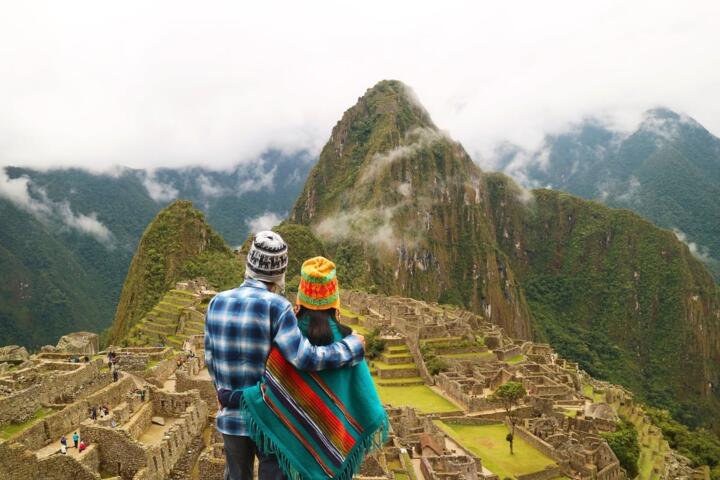
The primary failure in current travel patterns is the "bucket list" mentality, which creates localized hyper-congestion. Travelers often converge on the same 5% of sites, such as Machu Picchu or Venice, while ignoring equally significant locations like the Qhapaq Ñan (the Andean Road System) or the Stari Grad Plain in Croatia.
This concentration leads to physical degradation of ancient masonry and the "Disneyfication" of local cultures. When a site becomes a backdrop for social media rather than a subject of study, the educational value is lost. Furthermore, failing to account for the "carrying capacity"—the maximum number of people a site can sustain without permanent damage—results in restrictive permit systems that catch unprepared travelers off guard. In 2023, the Acropolis in Athens had to implement a 20,000-visitor daily cap to prevent structural erosion, a direct consequence of unmanaged mass tourism.
High-Impact Travel
To experience these sites authentically while contributing to their preservation, travelers must shift from passive observation to active engagement. This requires utilizing professional-grade tools and specific logistical strategies.
Leveraging the ICOMOS and IUCN Technical Reviews
Before visiting, consult the ICOMOS (International Council on Monuments and Sites) technical evaluations. These documents provide the specific reasons a site was inscribed and highlight current threats. If you are visiting the Historic Centre of Florence, understanding the specific risks of flooding and urban pressure identified in these reports changes your perspective from seeing a "museum city" to seeing a living, breathing conservation project.
Navigating the Permit and Quota Systems
Real-world logistics demand early action. For the Inca Trail, permits for peak season (May–August) often sell out six months in advance. Use platforms like PermitTree or official government portals to track availability. For the Alhambra in Spain, the "Generalife" and "Nasrid Palaces" require timed entry tickets that are strictly enforced by QR scanners; missing your 30-minute window means total forfeiture of access.
Engaging with "Site-in-Danger" Conservation
Direct your resources toward sites listed on the "List of World Heritage in Danger." These locations, such as the Old City of Jerusalem or the Tropical Rainforest Heritage of Sumatra, need the economic support of responsible tourism. Using specialized operators like Steppes Travel or Zegrahm Expeditions ensures that a portion of your fee funds local anti-poaching units or masonry restoration teams.
Utilizing Geographic Information Systems (GIS) for Planning
For natural sites like the Serengeti National Park, use Google Earth Engine or specialized wildlife tracking apps like HerdTracker to time your visit with the Great Migration. This isn't just about seeing animals; it’s about understanding the migratory corridors that the heritage status is designed to protect. Data shows that timing your visit to the "shoulder season" reduces your carbon footprint and provides a 40% increase in meaningful interactions with local conservationists.
Cultural Literacy and Linguistic Preparation
Inscribed sites like the Angkor Archaeological Park in Cambodia are vast—over 400 square kilometers. Hiring a guide certified by the Ministry of Tourism of Cambodia is non-negotiable. An expert guide can explain the transition from Hindu to Buddhist iconography in the bas-reliefs, which a casual observer would miss. Investing in a Babbel or Rosetta Stone course for basic local terminology demonstrates respect and opens doors to restricted areas or local insights.
Heritage Management
The Wadi Rum Protected Area in Jordan serves as a benchmark for mixed (natural and cultural) site management. By integrating the local Zalabia Bedouin tribe into the tourism infrastructure, the site has maintained its geological integrity while providing sustainable income. Result: Petroglyphs dating back 12,000 years remain largely unvandalized due to community-led surveillance.
In Europe, the Mont-Saint-Michel project focused on hydraulic damming to remove accumulated silt, restoring the site’s "insularity." The €200 million investment successfully returned the sea to the abbey’s base. For the traveler, this means the shuttle system and parking removals—while initially inconvenient—have restored the historical visual context of the 8th-century monastery.
Expedition Planning
| Category | Primary Example | Key Constraint | Recommended Service |
|---|---|---|---|
| Cultural | Petra, Jordan | High sandstone impact | G Adventures |
| Natural | Great Barrier Reef | Coral bleaching issues | Master Liveaboards |
| Mixed | Meteora, Greece | Strict dress codes | ToursByLocals |
| Urban | Kyoto, Japan | Seasonal crowding | InsideJapan Tours |
Common Strategic Errors
The most frequent mistake is "Day-Tripping." Visiting Mont-Saint-Michel or Dubrovnik between 10:00 AM and 4:00 PM puts you in the peak of cruise ship and bus tour crowds. This creates a negative feedback loop: you have a poor experience, and the site suffers from maximum density.
Avoid "Visual Extraction." Taking a photo and leaving provides zero benefit to the local economy or your own understanding. Instead, spend at least two nights in the vicinity. Data indicates that overnight visitors contribute 3.5 times more to the local economy than day-trippers, supporting the very craftsmen who maintain the site's structural integrity.
Lastly, do not ignore the "Buffer Zone." Every heritage site has a designated surrounding area intended to protect its visual and environmental context. Exploring the buffer zone of the Palace of Versailles, such as the town's local markets, provides a richer historical narrative than just standing in the Hall of Mirrors.
FAQ
How are sites chosen for the World Heritage List?
Sites must meet at least one of ten criteria and pass a rigorous evaluation of authenticity and integrity by advisory bodies like ICOMOS.
Is it ethical to visit sites "In Danger"?
Yes, provided you use licensed operators who contribute to conservation. Economic abandonment often leads to a total lack of security and increased looting.
What is the difference between a National Park and a World Heritage Site?
A National Park is a domestic designation. A World Heritage site has "Outstanding Universal Value" and is protected under international treaty.
How can I verify if a tour operator is truly sustainable?
Look for certifications from the Global Sustainable Tourism Council (GSTC) or partnerships with the World Monuments Fund (WMF).
Why are some famous sites not on the list?
Sovereign states must nominate their own sites. Some choose not to due to the strict development restrictions that follow inscription.
Author’s Insight
In my fifteen years of navigating high-stakes conservation zones, I’ve learned that the most profound moments don't happen at the "money shot" viewpoint. They happen when you sit with a stone carver in Fez or a ranger in the Virunga National Park and realize the immense technical labor required to keep these places alive. My advice: pick one site and stay a week. Deep immersion always beats a shallow checklist. True expertise in travel is about the quality of the observation, not the quantity of the stamps in your passport.
Summary
Understanding global heritage requires a shift from consumerism to stewardship. By utilizing technical resources like ICOMOS reports, respecting quota systems, and focusing on "at-risk" locations through reputable services like the World Monuments Fund, you transform from a tourist into a patron of history. Focus on the buffer zones, respect the carrying capacity of ancient structures, and prioritize deep engagement over social media metrics to ensure these sites remain for another millennium.