Coastal Access Frameworks
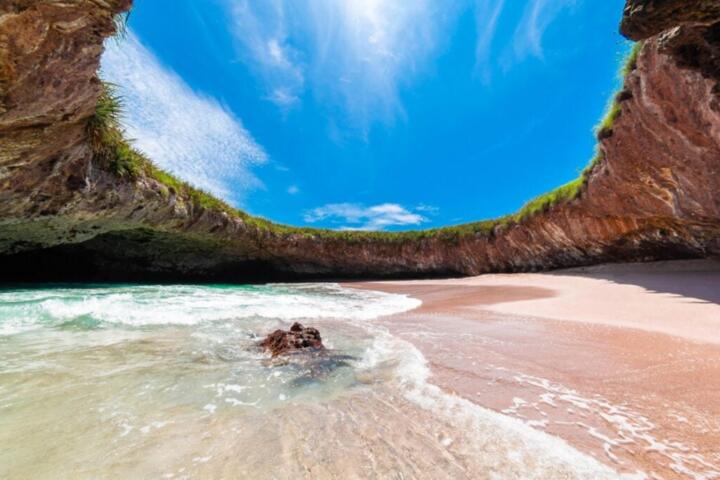
The legal status of a secluded beach depends heavily on the jurisdiction's interpretation of public trust doctrines and historical maritime laws. Globally, the conflict between private oceanfront property owners and the public's right to access tidal waters creates significant legal friction. In many regions, what appears to be a completely private, inaccessible cove is legally open to anyone who can reach it by water or by walking below the high-tide line.
Understanding these boundaries requires looking at specific statutory definitions of the coastal zone. Property deeds often claim ownership "to the water," but local statutes routinely override these claims to preserve public corridors. A 2024 global coastal management survey indicated that over 65% of coastal nations have explicit constitutional or statutory provisions guaranteeing public access to the shoreline, though enforcement mechanisms vary wildly between municipalities.
For hikers, kayakers, and property developers, misinterpreting these boundaries can lead to civil trespass charges or costly litigation. The distinction between public and private space typically relies on precise geographical markers, such as the mean high-water mark (MHWM) or the vegetation line. Mastering these definitions allows for confident navigation of secluded coastlines without violating local property statutes.
The Boundary Conflict
The primary error made by both property owners and beachgoers is assuming that a lack of physical, overland access makes a beach private. Many secluded beaches are hemmed in by steep cliffs, private estates, or gated communities, effectively blocking landward entry. However, under maritime laws derived from Roman and English common law, the wet sand area remains public property in the vast majority of coastal nations.
When property owners install fences, security cameras, or private security guards down to the water's edge, they often violate public easement laws. This creates a phenomenon known as "de facto privatization," where the public is intimidated away from legally accessible land. Conversely, beachgoers who cross dunes, lawns, or private pathways to reach a secluded cove are committing criminal trespass, even if the destination beach itself is entirely public.
The consequences of this confusion are severe. In hotspots like Malibu, California, or the Mediterranean coast, fines for blocking public access paths can reach up to $11,250 per day for property owners. For travelers, ignoring local signage or crossing protected ecological zones to reach a hidden beach can result in hefty fines, vehicle towing, or detention by local authorities.
Global Regulatory Systems
The Anglo-American Common Law Rule
In the United States, beach access is governed by state law, but most states adhere to the Public Trust Doctrine. This legal principle dictates that the air, running water, and the sea are common to all citizens. Generally, private property ends at the mean high-water mark, meaning the "wet sand" area is public, while the "dry sand" area above the high-tide line can be privately owned.
Oregon and Texas are notable exceptions, offering some of the most liberal access rules in North America. The Oregon Beach Bill of 1967 established public easements over all dry sand beaches up to the vegetation line. In Texas, the Open Beaches Act guarantees the public a free and unrestricted right of ingress and egress to the state-owned beaches from the line of mean low tide to the line of vegetation.
The Nordic Right to Roam
Sweden, Norway, and Finland operate under a legal concept known as "Allemansrätten" or the Right to Roam. This ancient customary right is constitutionally protected and allows individuals to access, walk, swim, or boat anywhere on the coast, including secluded beaches adjacent to private homes. The only restriction is that you must not pass through the "hemfridszon" (home-peace zone), which is the immediate zone around a residential dwelling, typically interpreted as 70 meters.
In Norway, the Outdoor Recreation Act of 1957 formalizes this distinction by categorizing land into "fenced" (cultivated/private) and "unfenced" (uncultivated/public) areas. Virtually all secluded beaches, rocky coastlines, and fjords fall under uncultivated land, meaning you can camp for up to 48 hours without permission, provided you remain at least 150 meters away from the nearest inhabited house or cabin.
Mediterranean Public Demarcations
European Mediterranean nations enforce strict state ownership of the coastline. In Spain, the "Ley de Costas" (Coast Act) dictates that the entire maritime-terrestrial public domain is state property. This includes all beaches, surf zones, and cliffs, regardless of who owns the adjacent land. The law enforces a protection easement zone extending 100 meters inland from the shoreline, where private construction is heavily restricted and public passage must be maintained.
Similarly, in France, the "Loi Littoral" protects public access along the entire coastline. A statutory pedestrian easement, known as the "sentier du littoral," obligates private oceanfront property owners to allow a path of at least 3 meters wide through their land for public walking parallel to the sea. Private beaches do exist in France via state-concession leases, but operators must leave a strip of sand at least 5 meters wide open for public transit at low tide.
Oceania Customary Ownership
New Zealand and Australia present unique legal landscapes where Western property frameworks intersect with indigenous customary rights. In New Zealand, the Marine and Coastal Area (Takutai Moana) Act 2011 established that the common marine and coastal area cannot be owned by anyone, preserving public access for swimming, boating, and walking. However, large stretches of secluded coast are bounded by private farmland, requiring owner permission for overland crossing.
Australia relies on the Crown Land framework, where beaches up to the high-water mark are almost universally public. A major caveat exists in northern regions, where the Aboriginal Land Rights Act grants traditional owners title over the intertidal zones of specific secluded coastlines. In places like the Northern Territory, visitors frequently require a permit from local land councils to access or fish on secluded beaches, overriding standard public trust assumptions.
Southeast Asian Concession Zones
In nations like Thailand, Indonesia, and the Philippines, national laws explicitly declare all shorelines as public land. Thailand's Land Code states that land changing naturally into a beach becomes public property. However, enforcement is notoriously weak, and luxury resorts frequently build directly over access points, effectively creating exclusive, illegal enclaves on secluded islands like Phuket or Bali.
The Philippines uses a strict system of "Salvage Zones" under the Water Code (Presidential Decree No. 1067). This mandate enforces a public easement of 3 meters in urban areas, 20 meters in agricultural zones, and 40 meters in forested areas along the entire shoreline. No private entity can legally construct permanent structures or restrict public access within these designated zones, though hidden enforcement gaps remain prevalent in remote provinces.
Enforcement Case Studies
A famous legal battle occurred in Martins Beach, California, where a billionaire property owner purchased an 89-acre coastal property and closed the only gate leading down an access road to a secluded beach. This move sparked a decade of litigation regarding the California Coastal Act, which protects public access to the shoreline. The courts consistently ruled against the owner, establishing that historical public access cannot be unilaterally revoked by a new deed holder.
In Greece, a grassroots movement known as the "Towel Movement" erupted across Aegean islands like Paros and Naxos. Luxury beach bars had systematically expanded their private lounge chair concessions over entire secluded coves, violating the statutory rule that at least 50% of any beach must remain completely free of commercial structures. The Greek government responded with drone surveillance and heavy fines, revoking licenses from businesses that blocked public space.
These cases demonstrate that public access rights are increasingly defended by both legal precedents and citizen oversight. For developers and travelers alike, assuming that wealth or geographical isolation guarantees complete privacy is a high-risk assumption in the current legal climate.
Access Rules Comparison
| Jurisdiction | Boundary Line | Overland Right | Camping Allowed |
|---|---|---|---|
| United States | High-Water Mark | No (Trespass Law) | Varies by State |
| Sweden | Vegetation Line | Yes (Roam Right) | Yes (48 Hours) |
| Spain | 100m Public Zone | Yes (Easement Path) | Strictly Prohibited |
| Thailand | All Intertidal sand | No (Resort Blocked) | Rarely permitted |
Avoid Legal Infractions
To navigate secluded beaches without legal repercussions, always determine the current tide phase. If you are walking along a narrow coastline hemmed in by private property, remaining below the wet sand line is your primary legal defense under standard public trust doctrines. Use a reliable local tide chart app to ensure you do not get trapped by rising water, forcing you to trespass onto private high ground.
Never mistake an unmarked path for a public right of way. In many rural areas, farmers and land corporations leave access roads open for utility vehicles, but walking down them constitutes civil trespass. Look for official government markers, trail blazes, or public easement signs before walking inland away from the water's edge.
When anchoring a boat or personal watercraft off a secluded beach, know the anchoring laws. In some jurisdictions, the water itself is public, but dropping an anchor onto the seabed within a certain distance from a private aquaculture lease or marine protected zone is illegal. Always verify local marine park boundaries before mooring near a secluded beach.
FAQ
Is a beach private if a resort surrounds it?
In most countries, no. While the resort owns the land surrounding the beach, they do not own the actual shoreline or intertidal zone. You can legally access the beach via water (boat, kayak, or swimming) and sit on the sand, even if you cannot walk through the hotel lobby to get there.
Can a property owner legally order me to leave?
If you are standing below the high-water mark or within a designated public easement zone, a private property owner has no legal authority to remove you. However, if you crossed private land to reach that spot, they can request that law enforcement cite you for trespass.
What does the wet sand rule mean in practice?
The wet sand rule means the public owns the portion of the beach that is regularly covered and uncovered by the daily tide cycle. As long as the sand is damp from recent wave action, you are generally standing on public land under common maritime legal frameworks.
Are dogs allowed on secluded public beaches?
Public access rights for humans do not automatically extend to domestic animals. Many public shorelines have strict environmental regulations protecting nesting shorebirds or marine mammals. Always check local municipal ordinances or state park rules regarding leash mandates and canine bans.
How do I find legal public access pathways?
Use official government mapping tools, cadastral maps, or dedicated coastal access apps provided by regional environmental agencies. These platforms show verified public easements, historical right-of-way paths, and state-owned coastal parcels that are legally open to the public.
Author's Insight
Throughout my years mapping coastal properties and reviewing maritime land disputes, I have found that local knowledge is secondary to statutory definitions. Property boundaries on paper are constantly shifting due to erosion and rising sea levels, making the physical high-water mark the only boundary that matters in real-time. My core recommendation is to always approach a secluded beach from the water if you want to avoid legal gray zones entirely. If you choose an overland route, a quick check of the local land registry map can save you from a costly citation or an unpleasant confrontation with a property owner.
Summary
Navigating the legalities of secluded beach access requires a clear understanding of regional coastal zone frameworks and boundary definitions. While the public trust doctrine generally protects the right to enjoy the wet sand and intertidal zones globally, landward entry across private property remains strictly regulated. Always prioritize water-based access, respect local "Right to Roam" boundaries where they exist, and consult official cadastral maps before embarking on an overland coastal trek. Protecting your right to explore requires equal respect for local conservation mandates and legitimate private property borders.