Untouched Latitudes
The traditional island holiday—defined by manicured resorts in the Maldives or crowded beaches in Santorini—is facing a crisis of authenticity. As global tourism levels surpassed pre-pandemic peaks in late 2024, the "undiscovered" has become the ultimate luxury. Off-grid island travel isn't just about a lack of Wi-Fi; it is a deliberate move toward destinations where the local ecosystem and culture remain the primary stakeholders, rather than the tourism industry.
Data from the World Tourism Organization (UNWTO) suggests that "niche experiential travel" is growing at a rate of 14% annually, nearly double the rate of traditional mass tourism. For instance, while Bali receives millions of visitors yearly, the nearby Alor Archipelago offers a blueprint for what islands looked like fifty years ago. In these spaces, your presence contributes directly to local economies without the dilution of intermediary global chains.
From a practical standpoint, choosing an off-grid gem means navigating areas with intermittent electricity and limited supply chains. However, the trade-off is a level of biodiversity and solitude that is mathematically impossible to find in tier-one destinations. In the Raja Ampat islands of Indonesia, for example, marine biologists have recorded over 1,400 species of fish in a single area—a density unseen in the heavily trafficked waters of the Caribbean.
Authenticity Erosion
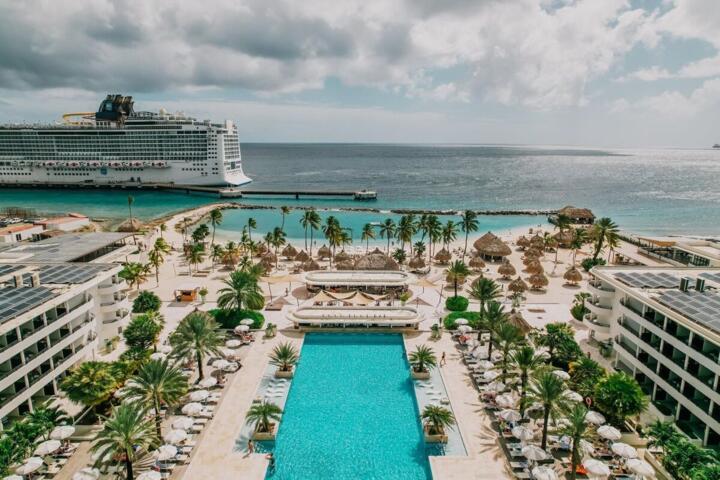
The primary mistake modern travelers make is equating "luxury" with "amenity density." When we flock to hyper-developed islands, we participate in a feedback loop that destroys the very beauty we came to see. This leads to the "Tourist Paradox": as soon as a location becomes accessible and comfortable, it loses the unique characteristics that made it desirable.
Over-reliance on mainstream booking platforms like TripAdvisor or Expedia often funnels 90% of tourists into the same 10% of landmass. This concentration causes massive environmental degradation. In Boracay, Philippines, the government was forced to close the entire island for six months in 2018 to rehabilitate the sewage system and ecosystem—a direct result of unsustainable, grid-dependent tourism.
Furthermore, many travelers fail to account for the "leakage effect." In highly developed island resorts, up to 80% of the money spent by tourists leaves the country to go to foreign hotel owners and food suppliers. By staying on the grid, you are often funding a corporate entity rather than the indigenous community that stewards the land. This lack of financial directness weakens the resilience of these fragile island ecosystems.
Off-Grid Exploration
Mastering the Art of Autonomous Logistics
Transitioning to an off-grid environment requires a fundamental shift in how you pack and prepare. You cannot rely on a 7-Eleven being around the corner. I recommend utilizing Garmin InReach satellite communicators for safety, as cellular towers are non-existent in places like the Tuamotu Archipelago. For power, portable solar arrays from Goal Zero are no longer optional; they are the baseline for maintaining communication and photography equipment in salt-heavy, humid environments.
Curating Local-First Accommodation
Instead of searching for "hotels," look for "homestays" or "community-owned eco-lodges." Platforms like Homestay.com or specialized regional sites like Stay Raja Ampat provide direct access to local hosts. This works because it bypasses the corporate filter. In the Solomon Islands, staying in a leaf-hut village provides 100% economic benefit to the tribe, ensuring they have the financial resources to protect their forests from logging interests.
Navigating Non-Linear Transportation
Getting to these gems requires patience and a "multi-modal" mindset. You might fly into a hub like Manado, take a local ferry, and then hire a traditional longtail boat. Tools like Rome2Rio provide a starting point, but the best information comes from local Facebook groups or WhatsApp communities. In the San Blas Islands of Panama, the only way to move between the 365 islands is by negotiating with the Guna Yala people directly—a process that requires cultural intelligence over a credit card.
Biological and Cultural Sensitivity
Off-grid islands often have fragile biomes. Experts now advocate for "Leave No Trace" plus one. This means not only carrying out your own waste but removing plastic found on the shore. Use reef-safe sunscreens like Stream2Sea—standard oxybenzone-based lotions are a major contributor to coral bleaching in remote areas where water circulation is limited.
The Financial Reality of Remote Travel
Contrary to popular belief, off-grid doesn't always mean cheap. While the daily cost of living is lower, the "cost of entry" (charter flights, private boat transfers) can be high. However, the ROI is measured in exclusivity. Spending $500 on a private boat to the Mergui Archipelago buys you a beach that you will share with zero people, whereas $500 in Maui might barely cover a mid-range hotel room overlooking a parking lot.
Remote Success Studies
Case Study 1: The Socotra Archipelago Expedition
A group of ten travelers sought to explore Socotra, Yemen—an island often called the "Galapagos of the Indian Ocean."
- The Challenge: Zero traditional tourism infrastructure, complex visa requirements, and no international banking.
- The Solution: They partnered with a local agency, Socotra Trekking Tour, which handles logistics via 4x4 vehicles and camping setups. They brought USD in cash (essential for remote Yemen) and relied entirely on local guides.
- The Result: 10 days of total immersion among Dragon Blood trees. The local community received $15,000 in direct revenue, and the travelers documented three endemic plant species not seen in recent Western literature.
Case Study 2: Reclaiming the Scottish Outer Hebrides
A digital nomad wanted to disconnect without leaving the Northern Hemisphere, focusing on the Isle of Harris.
- The Challenge: Extreme weather and the need for reliable offline navigation.
- The Solution: Using AllTrails offline maps and a Starlink Mini for emergency work sessions, they focused on the Luskentyre region. They stayed in a "Blackhouse" restoration project.
- The Result: A 30% reduction in travel costs compared to a London staycation, with 100% of the food sourced from local crofters (small-scale farmers).
Preparation Checklist
| Category | Details & Purpose |
|---|---|
| Communication | Satellite Messenger (Garmin). Essential for safety outside GSM range. |
| Power | 20,000mAh Power Bank + Solar Panel for sun-reliant areas. |
| Health | Broad-spectrum Antibiotics & Hydration Salts for self-sufficiency. |
| Water | Grayl GeoPress Purifier. Eliminates the need for plastic bottles. |
| Finance | Local Cash (Small Denominations). Most remote islands have no ATMs. |
| Navigation | Maps.me (Offline Maps). GPS works without cellular data. |
| Ethics | Biodegradable Soap (Dr. Bronner’s). Prevents reef contamination. |
Common Pitfalls
The most frequent error is underestimating the "Time Tax." On a remote island, a scheduled ferry might be delayed by two days due to swell. Never book a tight international connection immediately following an off-grid leg. Always allow a 48-hour "buffer" in the mainland hub.
Another mistake is the "Colonial Mindset"—expecting Western standards of service and speed. Off-grid travel operates on "Island Time." To avoid frustration, stop viewing delays as problems and start viewing them as part of the destination's character. If you demand a 10-minute check-in and high-speed fiber, you aren't ready for a truly undiscovered gem.
Lastly, travelers often fail to research local customs. In many remote islands (like those in Vanuatu or Fiji), land is owned by families or tribes. Walking on a "deserted" beach without permission can be seen as trespassing. Always ask a local elder or your host before exploring seemingly empty stretches of coastline.
FAQ
Is off-grid island travel safe for solo travelers?
Yes, but it requires higher situational awareness. Remote communities are often incredibly safe due to close-knit social structures, but you must have a satellite communication device and share your itinerary with someone back home.
How do I handle medical emergencies without a hospital nearby?
Purchase high-level evacuation insurance like Global Rescue or World Nomads. Standard travel insurance often won't cover a $50,000 helicopter extraction from a remote atoll.
Can I still work remotely on an off-grid island?
With the advent of Starlink, yes. However, traditional cellular roaming is unlikely to work. If your work requires 24/7 uptime, you must bring your own hardware.
How do I find these "undiscovered" islands?
Look at bathymetric maps and Google Earth. Identify islands that are at least 50 miles from an international airport. Cross-reference these with "Sailing Directions" (marine guides) which often list anchorages that tourists never see.
Is it expensive to eat on remote islands?
Actually, it is often cheaper, provided you eat what the locals eat. Imported goods (like Pringles or Coca-Cola) will be 3x the price, but fresh-caught tuna and local root vegetables are usually incredibly affordable.
Author’s Insight
In my fifteen years of exploring maritime frontiers—from the Skeleton Coast to the Chagos Archipelago—I’ve realized that the greatest luxury isn't a high thread-count sheet; it’s the absence of noise. I once spent two weeks on a tiny islet in the North Moluccas where the only "schedule" was the tide. I learned more about resource management and mindfulness in those fourteen days than in a decade of city living. My advice? Don't wait for these places to be "discovered" by the 5-star hotel chains. Once the paved road arrives, the magic departs. Pack a good water filter, leave your expectations at the dock, and go before the Wi-Fi does.
Summary
The shift toward off-grid island travel represents a necessary evolution in how we consume the world. By stepping away from the "grid," we protect fragile ecosystems, support local economies directly, and rediscover the raw beauty of our planet. Success in these regions depends on meticulous preparation—using tools like Grayl for water and Garmin for safety—and a mindset that prizes experience over convenience. Your next trip should be off-grid because the world is shrinking, and the only way to find something real is to go where the map starts to fade. Choose the remote atoll over the resort; the return on investment for your soul is immeasurable.